20 August
Brand Conversation / Publications
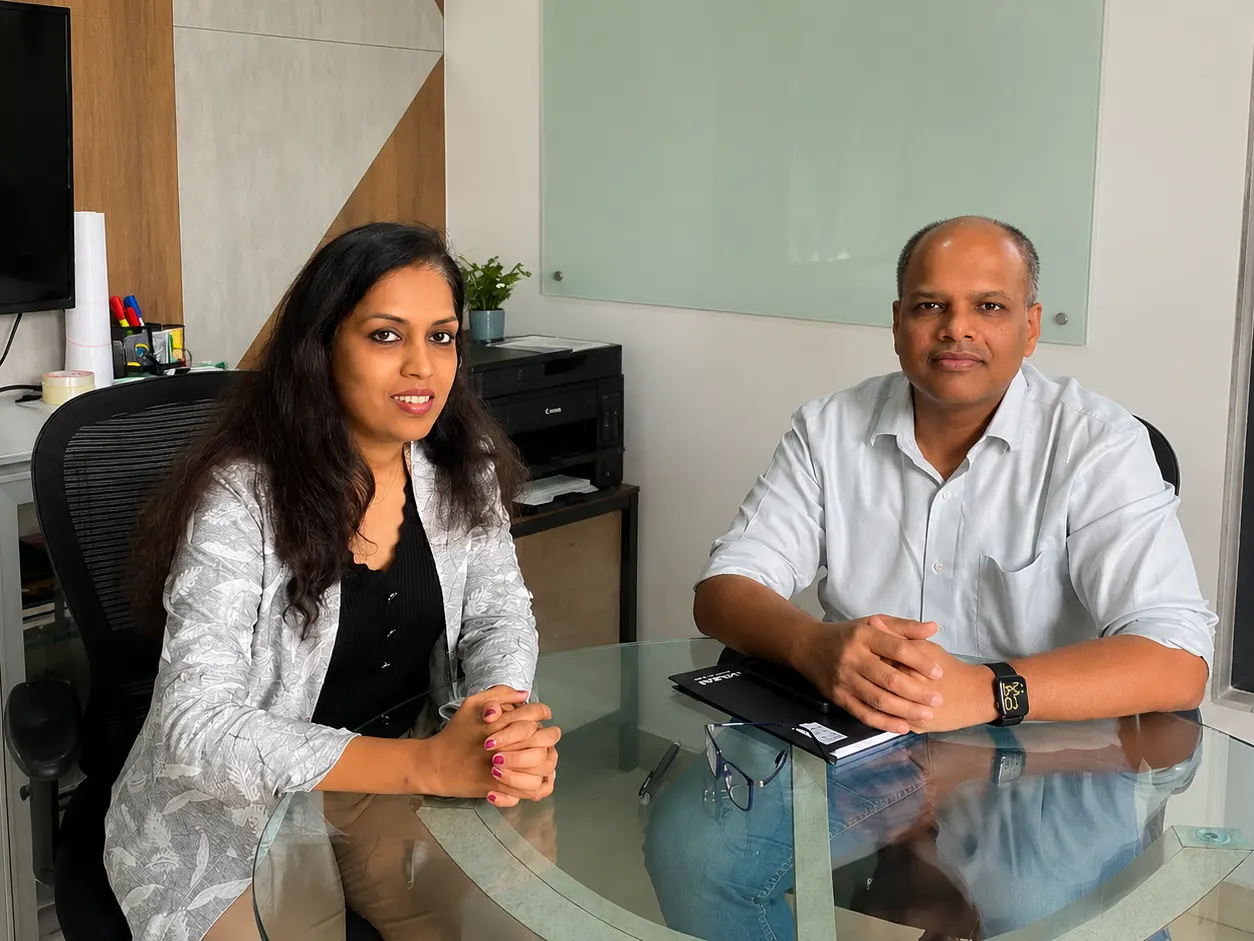
Brand Conversation with Mangesh Agarwal – Managing Director, Ecoclean Machines Pvt. Ltd.
- The Brand March
- 0 Comments
Heart to Brand Conversation
Mangesh Agarwal – Managing Director, Ecoclean Machines Pvt. Ltd.
Q. Ecoclean India has become one of the most respected names in industrial cleaning solutions. What have been the defining milestones in this journey?
I would say our journey has been built around three things: people, customer trust and technology.
Over the years, Ecoclean India has evolved from being primarily a supplier of cleaning equipment to becoming a much more complete technology and solutions partner for the Indian manufacturing industry, particularly in components cleaning.
We always work as consultants to our customers than a supplier. First understanding their cleaning challenges, then developing the right solution, implementing it, making sure the process is stable and working well, and most importantly, supporting them throughout the lifecycle of the equipment.
One important milestone has been our ability to develop and manufacture increasingly sophisticated cleaning systems in India, high quality at affordable price, while remaining closely connected to the global Ecoclean technology network. That combination of local manufacturing capability and global technology has been a strong differentiator for us.
Another major milestone has been earning the confidence of demanding customers across industries. In our business, customers don’t buy a machine simply because it looks good. They buy it because they trust that it will perform consistently for many years.
And finally, I would highlight our people. We started with a sales and service organization way back in 2006, and built customer confidence through our knowledge, hard work and strong service capabilities and utmost transparency with our customers. Over time, we have built engineering, manufacturing and project execution capabilities as well.
Last but not lease, the trust of our shareholders in India market and Ecoclean India team has helped me a lot. So, if I had to summarize the journey in one sentence, I would say: We have moved from sales and service of machines to becoming a partner in our customers’ manufacturing excellence.
Q. Manufacturing today is no longer just about production capacity. What does “manufacturing excellence” mean to you in today’s competitive landscape?
For me, manufacturing excellence is not simply about producing more machines. It is about creating higher value in shorter time, with less waste and consistently higher quality.
A world-class manufacturing organization should be able to answer four basic questions:
- Are we producing the right product?
- Are we producing it right the first time?
- Are we delivering it when we promised?
And, most importantly, are we creating real value for the customers while doing all of this?
That means quality, cost, delivery, technology, safety and sustainability all must work together. I also believe manufacturing excellence is increasingly about the speed at which an organisation learns.Markets change. Customers change. Technologies change. The organisation that learns faster will eventually outperform the organisation that simply has more machines.
That is also the thinking behind initiatives such as our EcoR.P.M. programme, where we focus on reducing process Muda, or waste, by addressing issues at the grassroots level. Ultimately, manufacturing excellence is not a destination, it’s a journey. It is a mindset that should be visible from the engineering drawing all the way to the Ecoclean machine operating on the customer’s production line.
Q. How has Ecoclean India’s manufacturing capability evolved over the years to meet the changing expectations of Indian and global customers?
The expectations of customers have changed dramatically. Earlier, the primary question was often: “Can you supply the machine?”
Today, the questions are much broader:
- Can you provide the right technology?
- Can you customize it?
- Can you manufacture it competitively?
- Can you deliver it on time?
- Can you provide lifecycle support?
- Can you help us meet our environmental requirements?
So, we have had to develop capabilities across the entire value chain.
Our manufacturing processes have become more structured. With the support our German principles, our engineering capabilities are getting stronger. We have increased our focus on standardization and modularization, while still retaining the flexibility to customize where the application requires it.
Project execution has also become a major area of focus, because from the customer’s perspective, a good machine delivered on time is considered a valuable product. And perhaps most importantly, we are continuously trying to build a culture where problems are identified early and solved early, rather than being discovered at the end of the project. The objective – Indian manufacturing capability should never mean compromising on global standards.

"Indian manufacturing capability should never mean compromising on global standards."
Mangesh Agarwal
Managing Director, Ecoclean Machines Pvt. Ltd.
Q. In manufacturing, a brand is built long before the marketing team starts communicating. How does Ecoclean ensure every product reinforces customer trust?
I completely agree with that statement. In industrial manufacturing, the real brand ambassador is not the brochure. It is the machine sitting on the customer’s shop floor.
If the machine performs reliably, is delivered as promised, is easy to maintain and receives good service support, the customer remembers that experience.
I remember an interesting experience from a customer’s shop floor in Bangalore. An audit was in progress, and the auditor asked the line manager about the maintenance schedule for the Ecoclean machine. The line manager’s answer was very interesting. He said, “Sir, I don’t have to come and find any fault in the machine. When the machine needs me for maintenance, it calls me.”
For me, that is what customer trust really means.
Our brand is built through hundreds of small decisions: clear communication from pre-sales right through installation, the accuracy of an engineering drawing, the quality and selection of components, workmanship on the shop floor, the discipline of testing, the way a project manager communicates a delay, and the speed with which our service team responds to a problem.
That is why I strongly believe brand building is everyone’s responsibility. Marketing can create awareness, but only the organisation can create trust. And trust is created when our promises and our actual performance consistently match.
Q. What investments have made the biggest difference: automation, engineering capability, digitalization, or people?
If you ask me to choose only one, I will choose people.
Automation, engineering tools, and digitalization are extremely important. However, ultimately, people decide how effectively those technologies are used. For us, the biggest value comes when all these investments work together.
Strong engineering capability allows us to design better solutions. Manufacturing technology improves consistency and productivity. Digitalization gives us better visibility and data. Automation can remove repetitive work and improve quality.
But people connect all these pieces. I often think of technology as an amplifier. If you have a good process and capable people, technology can make them significantly better. But if the underlying process is weak, technology can simply help you make mistakes faster. So, our investment priority is not machines versus people.
It is: Capable people + strong processes + digital tools + the right equipment.
That combination creates sustainable manufacturing capability.
Q. Advanced manufacturing often highlights machines and automation. How do you ensure people remain at the centre of the organisation?
We should never forget that manufacturing is ultimately a human activity. Even the most advanced automated factory requires people to design it, program it, maintain it, improve it and make decisions when something unexpected happens.
For me, keeping people at the centre means giving employees three things: clarity, capability and ownership. People need to understand where the company is going. They need opportunities to develop their skills. And they need enough freedom to take decisions and solve problems. We are also trying to move away from a culture where people simply wait for instructions.
If someone sees a problem, I want that person to feel responsible for solving it, rather than saying:
- “This is not my job.”
- “This doesn’t belong to my department.”
- “My boss hasn’t asked me to work on it.”
That cultural shift is extremely important.
And at Ecoclean, every machine is, in many ways, handcrafted. Our future machines will certainly become more and more intelligent, but the intelligence behind them will still come from people.
Q. Employee engagement has become a strategic priority across industries. What does employee connect mean at Ecoclean?
Employee connect, for me, is much more than organising events or celebrations. It means that employees should understand why their work matters.
A person working in purchase should understand how a delayed component affects customer delivery. Someone in engineering should understand how a design decision affects product cost and the customer’s experience. Someone in manufacturing should understand how workmanship affects the customer’s experience and ultimately the Ecoclean brand. That is real employee connect: connecting an individual’s daily work with the larger purpose of the organisation.
Communication is also very important. Employees should know what is happening in the company, what challenges we are facing and where we want to go.
At Ecoclean India, we have also defined our ETHOS collaboratively with our employees, and we try to reflect those values in our day-to-day working. Initiatives such as EcoR.P.M., Kaizen and 5S also help because they give people an opportunity to contribute ideas rather than simply follow processes.
For me, engagement starts when people feel they are participants in the journey, not passengers.
Q. How do you create ownership among employees instead of simply assigning responsibilities?
Ownership cannot be created simply by putting the word “ownership” into a job description. It comes from the way directors, HODs and managers behave. If every decision must go upwards, people will naturally wait for instructions. But if people are given clarity about the objective and the freedom to decide how to achieve it, they begin to take ownership.
I also believe accountability needs to be very clear.
When something goes wrong, the first question should not be:
“Whose fault is this?”
The first question should be:
“What happened? Why did it happen? And what are we going to do differently?”
That creates a problem-solving culture rather than a blame culture. At the same time, ownership means taking responsibility when things go wrong and giving credit when things go right.
For me, the ideal organisation is one where people don’t say: “This is my job.”
They say: “This is my responsibility, and I will make sure it gets done.”
Q. What kind of organizational culture are you intentionally building for the next generation of manufacturing professionals?
I want to build a culture that is professional and entrepreneurial, yet transparent and inclusive. Professional means we do what we say we will do. Entrepreneurial means we don’t wait for someone else to solve every problem. Transparent means we discuss problems openly rather than hiding them. And inclusive means we value people irrespective of hierarchy, department, gender or tenure in the organisation.
I also want to build a culture where competence matters more than designation. The person with the best idea should be heard, whether that person is a senior manager or someone who joined the company six months ago. We also need to become more comfortable with constructive disagreement.
Saying, “I have a different opinion,” should not be interpreted as disrespect. Sometimes it is exactly what the organisation needs.
For the next generation, I would like Ecoclean to be an organisation where people can say: “I am trusted to think, I am expected to perform, and I am given the opportunity to grow.”
Q. Many companies invest heavily in production capacity, but not enough in building their brand. In your experience, how do manufacturing capability, employee culture and brand reputation reinforce each other? Can one truly succeed without the others?
I don’t think anyone can succeed sustainably in isolation. I look at these three as three sides of the same triangle. Manufacturing capability determines what we can actually deliver. Employee culture determines how consistently we deliver it. And brand reputation is what the customer remembers about that product and service experience.
You can have excellent manufacturing capability, but if employees don’t care about quality or customer commitments, that capability will not translate into customer trust. You can have a great culture, but if your products consistently fail, the market will eventually notice. And you can spend a lot of money building a brand, but if the actual customer experience doesn’t support the brand promise, the reputation will eventually suffer.
So, yes, the three reinforce each other.
In fact, I would go one step further: Brand is essentially the accumulated memory of your manufacturing capability and your people’s behaviour. That is why brand building in manufacturing is a long game.
Q. Beyond products, what do you want customers to associate with the Ecoclean brand?
I would like customers to associate Ecoclean with trust, technology, responsibility and problem-solving. Trust means that when we commit to something, the customer can rely on us. Technology means that we don’t simply provide today’s solution. We continuously think about what the customer’s process will need tomorrow. Responsibility means that we don’t disappear after the machine is delivered. We remain a partner throughout the lifecycle of the equipment. And problem-solving means that customers should feel comfortable bringing us a difficult cleaning challenge and having a meaningful technical conversation with us.
Ultimately, I don’t want the customer to think: “Ecoclean supplied a machine.”
I want them to think: “Ecoclean helped me solve an important manufacturing problem.” That is a much stronger relationship, and that is the kind of relationship we want to build.
Q. Sustainability is becoming central to industrial growth. How is Ecoclean preparing for that future?
Sustainability is particularly important for a company like ours because industrial cleaning directly influences the consumption of water, chemicals, energy and other resources. So, sustainability cannot simply be treated as a separate or voluntary activity. It has to be embedded into technology itself.
We are increasingly looking at how cleaning processes can achieve the required technical result with lower resource consumption, better chemical management, reduced energy consumption and improved process efficiency.
There is also a very strong connection between sustainability and productivity. Reducing water, chemicals, energy, rework and unnecessary process steps are not only environmental improvements. They are also good manufacturing practices. That is why I see the future of industrial cleaning as cleaner, smarter and more resource-efficient manufacturing.
Our ongoing programmes such as EcoR.P.M. reinforce the same philosophy by encouraging us to continuously remove waste from our own processes. For me, sustainability ultimately comes down to one simple principle:
We have to build a manufacturing industry that can create more value without continuously consuming more resources.That is the direction in which Ecoclean has been moving, and I believe it is also where the industry is heading.
Related Posts

- The Brand March
- July 5, 2026
Less noise. More perspective.
In a world of constant notifications, emails, and social feeds, our attention is under continuo ..

- The Brand March
- August 20, 2026
Trust: Your Business’s Brand Asset In The Age Of Ai
We are living in information abundant age, commonly referred to as ‘info-obesity’. Every da ..