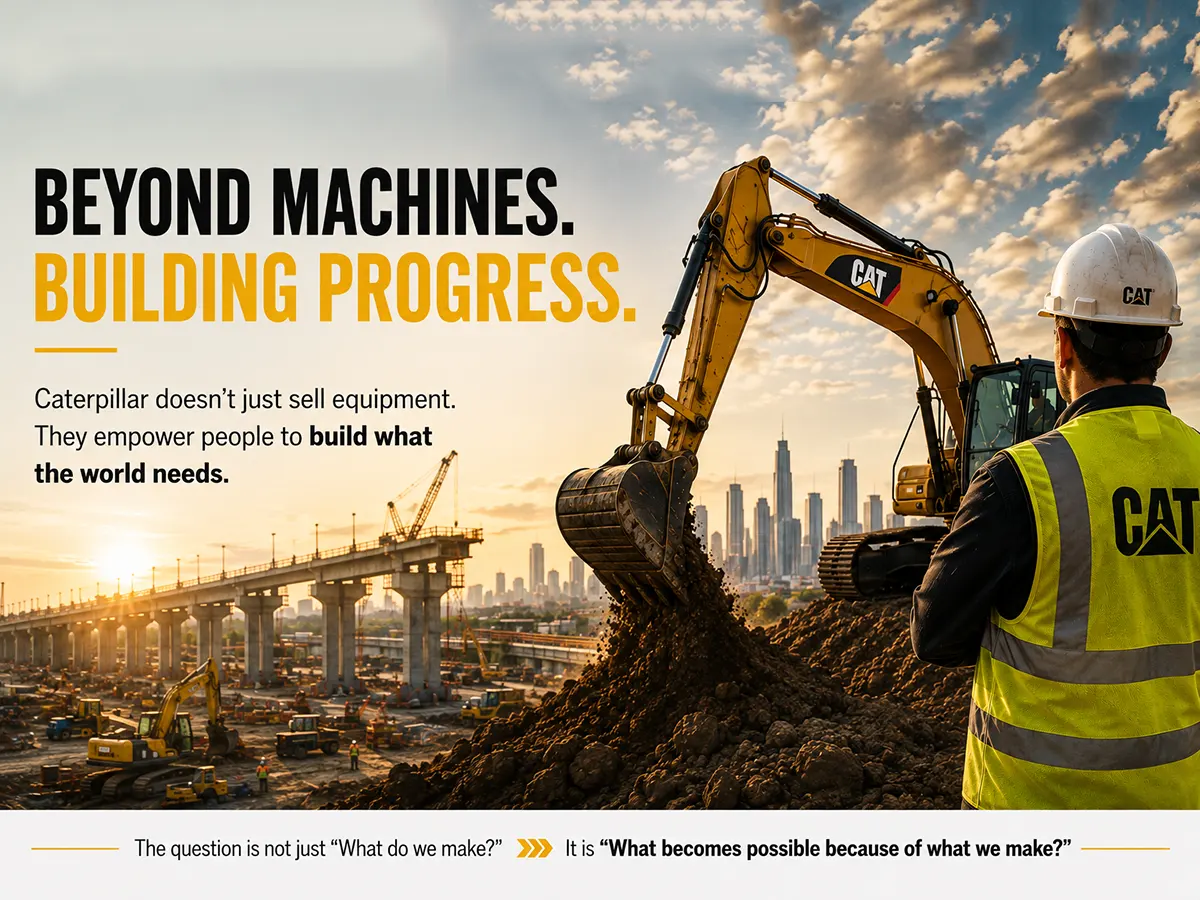
The strongest industrial brands do not merely sell products. They shape industry conversations and become trusted partners in their customers’ journeys. Construction and engineering leader Caterpillar provides a brilliant example of this approach.
Instead of focusing their primary marketing campaigns solely on horsepower or machine specifications, Caterpillar structures its narrative around the actual work their customers accomplish. They tell human-centered stories of how their equipment helps build critical infrastructure, keep local communities connected, and ensure operator safety on high-risk job sites.
By keeping their core communication focused on reliability, operator support, and long-term value, Caterpillar successfully shifts its brand position from a heavy equipment manufacturer to an essential partner in global progress.
This is how many B2B and industrial brands have an opportunity to rethink their communication. For a manufacturing or engineering company, technical specifications will always be important. They establish credibility and help customers evaluate performance. But specifications alone rarely build a memorable brand, connection with does.
A machine is not just about its capacity but the productivity it enables.
A technology is not about its features but the problem it solves.
A manufacturing capability is not just about scale but more about the confidence and reliability it delivers to customers.
Caterpillar demonstrates the power of moving communication beyond the product to the outcome, the people, and the progress behind it.
For industrial brands, the question should therefore not only be, “What do we make?” but
“What becomes possible because of what we make?”
That is where a product story begins to become a brand story.